 Book an appointment online
The only test that can be considered in the assessment of snoring and sleep apnea is a nocturnal sleep recording, either a polygraphic examination or a polysomnographic examination.
The nocturnal polygraphy examination is performed on an outpatient basis, meaning with an overnight stay at home. The recording is therefore advantageous because it closely resembles normal sleep conditions. This examination is largely sufficient for detecting, diagnosing, and analyzing obstructive sleep disorders; however, it does not allow for a precise diagnosis of more complex sleep disorders, particularly non-obstructive ones. It can be performed on children.
Polygraphy requires, in addition to wearing the device, the placement of a clip on the end of the finger, abdominal and thoracic straps, and nasal goggles.
Some polygraphs also include a microphone and an oral thermistor.
Polygraphy remains the most widespread screening test; it allows us to obtain a rate of abnormal respiratory events per hour of sleep, rate of apnea and hypopnea per hour: AHI. Polygraphy analyzes arterial oxygen saturation, that is to say the level of oxygen in the blood and its variations.
Polygraphy also allows for the analysis of respiratory events (snoring, apnea, hypopnea, desaturations) according to sleep position.
The results of the polygraphy thus allow patients to be classified:
- Simple snorers: AHI less than 5
- beginner apnea: AHI between 5 and 15
- Moderate sleep apnea syndrome: AHI between 15 and 30
- Severe sleep apnea syndrome: AHI above 30
 |
 |
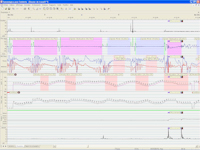 |
| CID Polygraph | Polygraph Embletta | Excerpt from a nocturnal polygraphic sleep analysis |
Polysomnography
Polysomnography requires hospitalization, so it is more involved and makes you sleep in unusual conditions, but it provides additional information on sleep stages because it collects electroencephalographic data.
The sleep examination of polysomnography is therefore more precise; polygraphy is therefore sufficient to eliminate obstructive sleep disorders, while polysomnography looks for non-obstructive sleep abnormalities, such as restless legs syndrome, depressive-type disorders, or, for example, specific diseases like catalepsy.
It is possible to precede polysomnography with various tests, including maintenance of wakefulness tests, in order to assess sleepiness.
Other examinations: CT scan, Celiac scan, MRI
Other tests may be offered but are not systematic in the assessment of snoring; these are essentially morphological radiological examinations:
- either a CT scan of the nasal cavities and sinuses as part of the assessment of a nasal obstruction
.JPG)
.JPG)
.JPG)

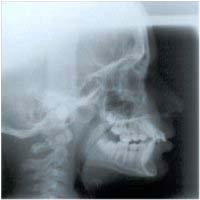
- either a lateral cephalometric radiograph examination to study the maxillomandibular bone structures

- In much more exceptional cases, an MRI scan to assess the volume of the base of the tongue

