 Book an appointment online
Aesthetic or functional rhinoplasty
 A large nose with a bump, a big, wide nose, a long nose, a deviated nose, a crooked nose, a rounded nose tip,
A drooping nose tip, a pointed nose... the request for modification of the appearance of the nasal pyramid or rhinoplasty
is most certainly one of the most requested procedures in cosmetic surgery.
More than any other surgical operation, the result must be flawless, as it is so obvious as "the nose on your face".
Rhinoplasty helps create a harmonious balance in the face. But this procedure (rhinoplasty ) is not simply a reshaping technique! It is essential to remember that the nose is not just a decorative element of the face, but also an organ dedicated to breathing, filtering, humidifying the air, and smelling.
Different types of rhinoplasty
There isn't just one type of rhinoplasty , but rather multiple different surgical procedures, which is both what makes this type of surgery so interesting and complex. Here is an attempt at classification, with explanations and results for each procedure, allowing each patient to find a relevant option for their own case.
- Standard rhinoplasty for a "hump"
- Rhinoseptoplasty, hump with septal deviation
- Symmetrical rhinoseptoplasty for nasal pyramid deviation and nasal obstruction
- Post-traumatic reduction-symmetrization rhinoplasty
- Rhinoplasty on thick skin
- Post-traumatic augmentation rhinoplasty with cartilage graft
- Post-traumatic augmentation rhinoplasty with bone graft
- Secondary rhinoplasty to correct a previous procedure after failure
- Rhinoplasty for rejuvenation
- Rhinoplasty with correction of the nasal tip and nostrils
- Medical rhinoplasty or rhinoplasty by injection of filler
- Rhinoplasty for sequelae of cleft lip and palate
- Ethnic rhinoplasty
- Feminizing rhinoplasty
- Long-term results
Discover what you need to know before considering rhinoplasty surgery
Because beyond the physical change, rhinoplasty brings about a real change in self-image. The therapeutic decision
It must therefore be carefully considered. The nose occupies a central place on the face; it is an element that cannot be
To hide. For patients who experience the shape of their nose as a social handicap, this procedure allows them
They often change their view of themselves, opting for a nose that is not stereotypical (surgical look) but a natural nose .
in keeping with their face and personality. So that the nose doesn't look like an afterthought, the technique must take into account
of the face as a whole. Nasal corrections can sometimes lead to additional procedures.
(especially on the chin) to achieve a balanced profile. Breathing, filtering, smelling—the nose must also perform these functions: breathing, filtering, smelling.
essential which should not be altered but on the contrary which can be restored through such an intervention.
The dialogue between the patient and the surgeon is of paramount importance. It will allow them to determine what the patient wants.
And finally, determine what is technically feasible for the surgeon and aesthetically suitable for the face.
What exactly is rhinoplasty?
Any surgical procedure on the nasal pyramid is considered a rhinoplasty, but it encompasses a quantity
important range of completely different procedures, from simple nasal tip touch-ups to total reconstruction.
This is why some rhinoplasty procedures have a functional respiratory or post-traumatic
or tumor-related treatments may be covered by social security and supplementary health insurance after an application has been submitted
prior agreement with social security. In most cases, it is a purely
Aesthetic treatment without any refunds.
A distinction must be made between functional rhinoplasty , the aim of which is to straighten the septum, a source of breathing difficulty,
corrective rhinoplasty aims to modify the shape and volume of the nose, either at the level of its part
The upper bony part, or its lower, mobile, cartilaginous part, can thus be straightened thanks to rhinoplasty.
To shorten or reduce the height and width of a nose in both its bony and cartilaginous structures. Surgeries of
Functional and corrective rhinoplasty can be combined
Rhinoplasty can encompass different procedures and can therefore be:
- a rhinoplasty for a simple touch-up under local anesthesia by injection of product ,
.JPG)
.JPG)
(correction of a post-operative inverted V-shaped appearance by Radiesse injection)
- a rhinoplasty for a simple touch-up under local surgical anesthesia ,
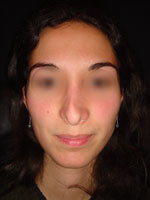
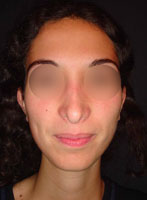
- a rhinoplasty to correct the cartilaginous lower part of the nose, without the need for bone work,
.JPG)
.JPG)
.JPG)
.JPG)
.JPG)
.JPG)
(correction only of the lower cartilaginous part of the nasal pyramid)
- a complete rhinoplasty with bone sectioning (osteotomy), via an internal approach (without scarring)
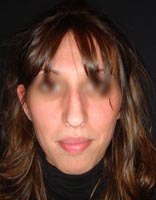

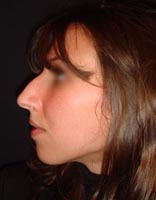
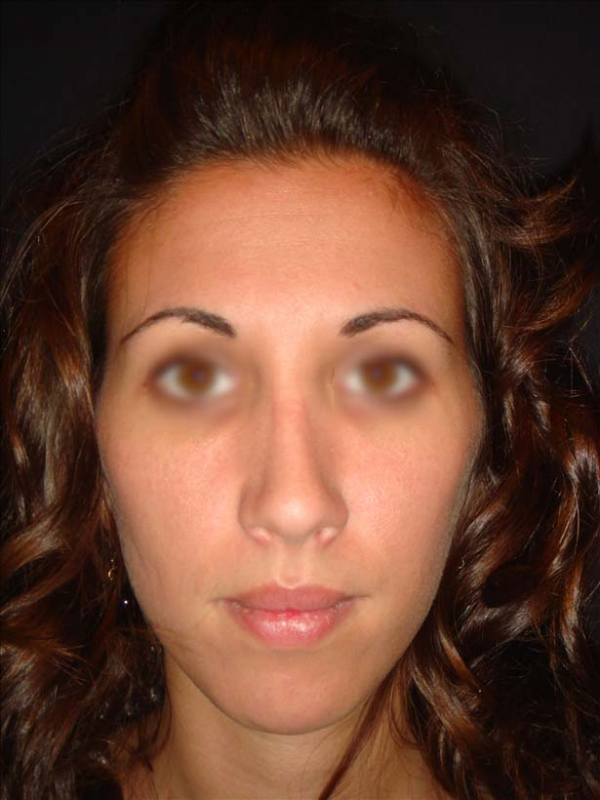
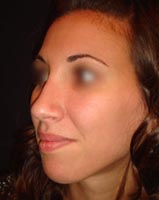
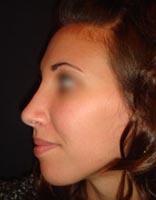
- a complete rhinoplasty with bone section (osteotomy), via external approach (with scar), indicated only for cartilage deformities and delicate revisions of rhinoplasty ( secondary rhinoplasty)
.JPG)
.JPG)
.JPG)
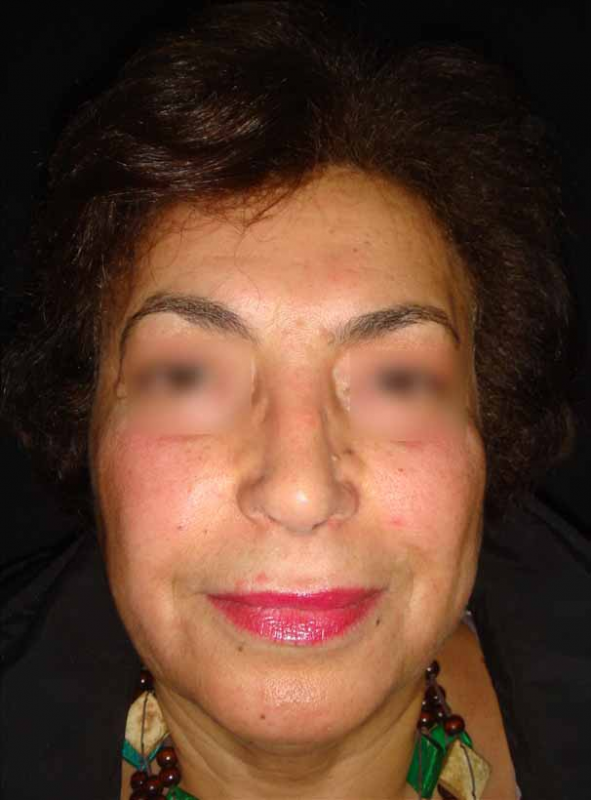
.JPG)
.JPG)
Revision rhinoplasty via an external approach (with scar) for a patient who had previously undergone surgery but still presented with a persistent deformity, drooping columella, and nasal obstruction. The decision was made to perform a revision rhinoplasty via an external approach two months post-operatively.
- a reconstructive rhinoplasty with post-traumatic or tumoral bone or cartilage graft.
.JPG)
.JPG)
.JPG)
These different interventions consequences at all, particularly in terms of post-operative outcomes and expected changes.

