 Book an appointment online
The essential step is to clearly define the objectives of the rhinoplasty. The patient must fully explain the changes they envision.
The face is made up of interdependent elements. Modifying the nose also alters the appearance of the eyes, particularly by changing the nasofrontal angle, modifying the upper lip by relaxing its tension, or altering the prominence of the chin in relation to the overall structure of the face. The chin can be modified simultaneously (see related procedures).
Pre-operative considerations
All rhinoplasty requires sufficiently long pre-operative consultations with the patient in order to establish a dialogue in a climate of trust, to answer all their questions and to provide explanatory and administrative documents.
At least two consultations are recommended to discuss the problems and answer questions.
The first consultation
It allows:
- to discuss the motivation behind the proposed action
- to perform a clinical examination of the nasal pyramid and the inside of the nose using a nasofibroscope, particularly in cases of associated respiratory disorder
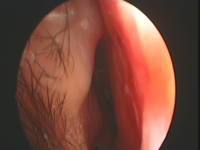
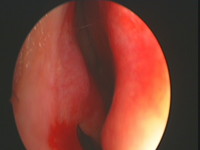
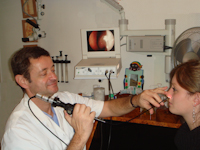
endoscopic view of the right and left nasal cavities clinical examination
- to discuss the envisaged aesthetic and anatomical modifications and link them to technical feasibility
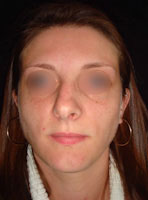
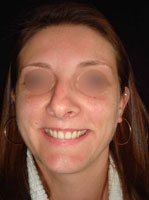
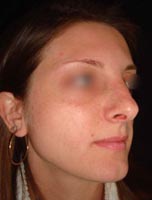
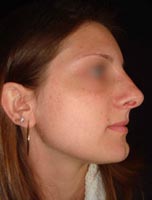
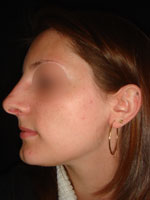
- to carry out a complete photographic assessment: 7 photos, then a simulation using appropriate software
 |
 |
 |
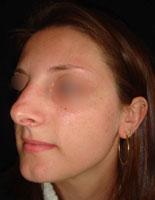 |
| Face | Smiling face | ¾ g | ¾ d |
 |
 |
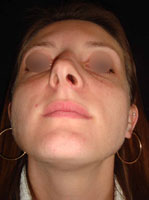 |
| Profile of | Profile g | head back |
- to present results of patients operated on within our team
- In some cases, a facial scan and a request for coverage are carried out
- to provide an information document on the intervention and the healthcare facility
- to provide a detailed quote outlining all the costs to be considered
The second consultation
It must take place at least 15 days later, this period corresponding to the legal reflection period.
- may be associated with an anesthesia consultation, which is mandatory at least 2 days before the procedure
- allows direct discussion of the rhinoplasty project either from photos or from computer simulations.
Working with medical photographs is essential. It allows for analysis and simulations, particularly of the profile, and helps visualize the expected outcome. Frontal simulations are, unfortunately, less precise. One must be wary of simulations, especially computer-generated ones, which will not accurately represent the final result. In any case, a simulation is crucial so you can get a sense of the outcome and thus better personalize your surgical procedure. Indeed, no two faces are alike, and a customized approach is essential.
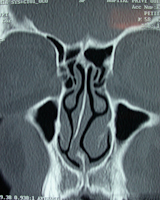
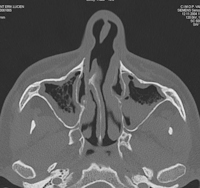
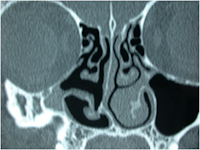
- allows for analysis of the facial scan if one has been performed; it may justify additional procedures on the sinuses (meatotomy), inferior turbinates (laser or radiofrequency turbinoplasty), nasal septum (septoplasty, sometimes endoscopic), chin (genioplasty) see associated procedures
 |
 |
|
Right septal deviation, |
bilateral maxillary sinusitis, septal deviation and septal perforation |
- This consultation focuses more on the precise course of hospitalization and post-operative care, as these depend closely on the type of procedure planned, which can only be decided at the second consultation
- The surgical risks and usual post-operative procedures will be detailed and clearly explained
Two consultations is a minimum number but by no means a maximum, as no question should remain unanswered in order to establish a real climate of trust and to approach the peri-operative period with maximum serenity.
During the clinical examination, certain elements are of particular importance, including
Examining the nose in the face
- The size of the nasal pyramid, the rule of thirds
- Analysis of the upper lip (movements, position)
- Analysis of the front (shape, curvature, height)
- The appearance of the cheekbones
- The shape of the chin
- Analysis of the maxillomandibular articulation and any potential orthodontic problems
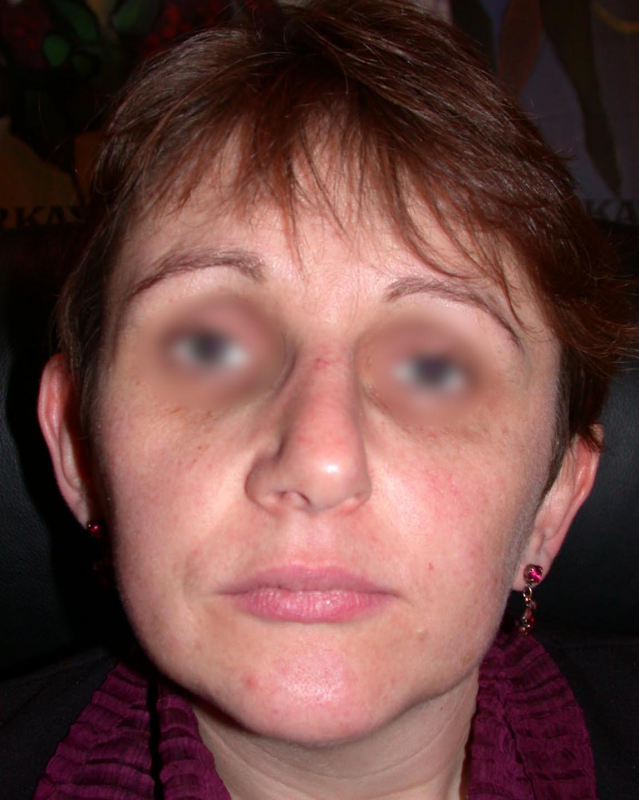
- The search for an overall asymmetry of one hemiface (minimal hypoplasia)
 |
 |
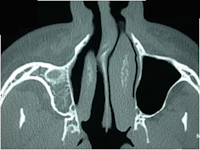 |
| Facial asymmetry | agenesis of the right maxillary sinus | with partition deviation |
Skin analysis is fundamental
Thick skin: tolerates irregularities but is less malleable and tends to be heavy.
Thin skin requires perfect regularity but allows for precise corrections.
All attempts to reduce subcutaneous tissue have failed
|
|
|
| Pre-operative primary rhinoplasty: Thin skin, risk of visualizing irregularities at a distance on the nasal bridge |
Secondary rhinoplasty before revision: Thick skin, osteo-cartilaginous resection, tendency to form a ball without structural definition |
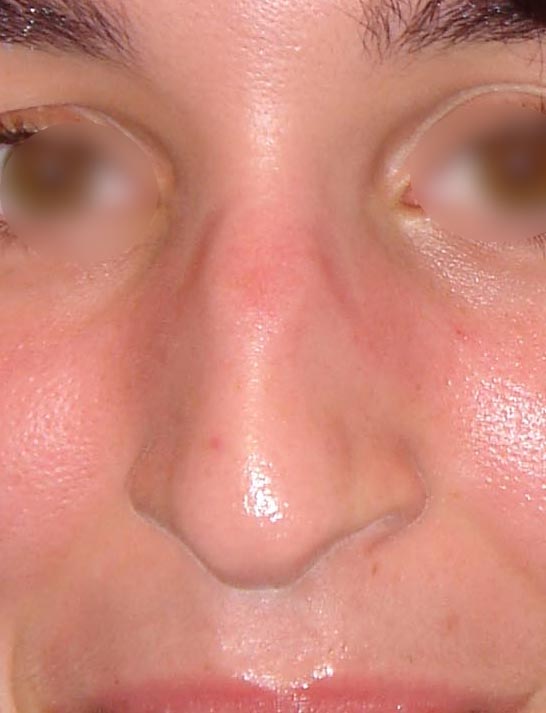
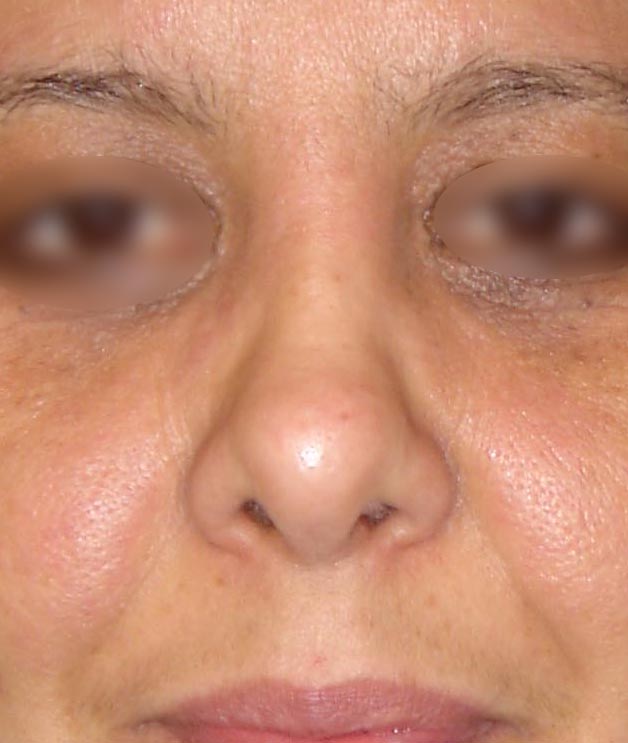
examination of the nose itself from the front
searching for pyramidal asymmetry
study of the width of the ridge, search for diastasis (non-combination of the nasal bones)
study of the tip and therefore the shape of the alar cartilages (asymmetry, champagne cork, drooping tip, bifid tip…)
study of nose length
analysis of the visibility of the nostrils
examination of the nose itself in profile
- study of the edge
- study of the nasofrontal, nasolabial, and nasofacial angles
- study of the columella in relation to the nostrils
- study of the columellar segment in relation to the philtrum
- study of movements from the tip of the nose to facial expressions
examination of the nose itself, examination of 3/4
- searches for a relief anomaly visible only on one side
- studies the proportion between cartilaginous and bony dome
- most significant impact socially and on photographic images
examination of the nostrils
analysis of size, symmetry, and proportions
.JPG)
.JPG)
.JPG)
smile examination
.JPG) |
.JPG) |
| Front view photo at rest | Front view photo while smiling |
Note the drooping of the tip of the nose and the change in the upper lip
endonasal examination
Participates in the assessment of nasal obstruction.
Assess the reality of the obstruction.
Search for the responsible site (septum, inferior turbinates, concha bullosa).
Correction compatible with the pyramidal gesture.
Investigating for an infectious disease.
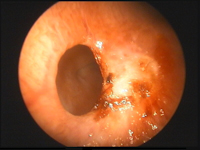
Looking for a sequela of a previous intervention (septal perforation, synechiae).
 |
 |
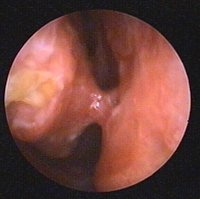 |
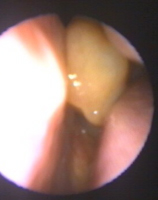
| Partition hole | Nasal cavity polyp | Inferior turbinate-septum synechia |
Nasofibroscopy
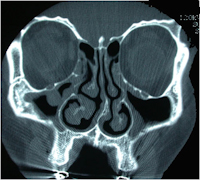
Scanner
Indispensable before rhino-septoplasty and even some rhinoplasties, it looks for sinusitis (treatment or preoperative information), a congenital anomaly, studies the septal deformation, the volume of the inferior turbinates, the horizontality of the floor, finally objectively traces the deformation and the part of the deformation of bone and cartilage (which may influence the decision to perform osteotomies)
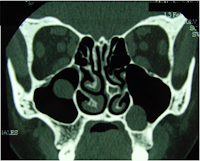
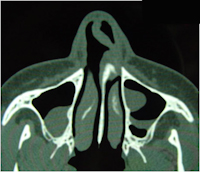
Significant deviation of the bony and cartilaginous septum
 |
|
| Asymmetry of the floor of the nasal cavity | septal deviation associated with large inferior turbinates |

