 Book an appointment online
Who is rhinoplasty for?
The right directions
Rhinoplasty results in a physical change and therefore a real evolution of self-image. The nose plays an important role in the face; it is an element that is difficult to hide.
Psychological motivation: Motivation must be deep, sincere, and well-considered. It must be a profoundly personal and therefore selfish undertaking, in no way influenced by an unwelcome remark, an external demand, or an emotional disappointment.
But for people who they consider the appearance of their noses like a handicapThis intervention allows them to change their self-perception, regaining not a stereotypical nose but a natural one.and to regain self-confidence.
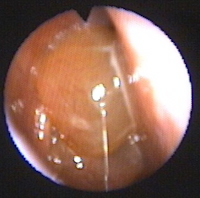
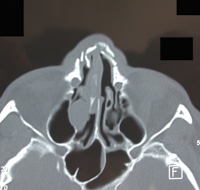
The functional request : respiratory discomfort due to a deviated septum or narrow nasal valve; the request may be a combination of functional and aesthetic concerns. The co-occurrence of sinusitis may allow for its treatment during the same surgical procedure.
.JPG) |
.JPG) |
|
| nasal valve problem |
respiratory discomfort caused by a deviated nasal septum |
nasal cavity polyp |
The after-effects of trauma : after-effects of a broken nose or more complex facial trauma, the demand is often to restore the nose to how it was before the accident.
|
|
 |
.JPG) |
.JPG) |
| Before the accident reconstruction | multiple fractures | after the accident | after the reconstruction |
The after-effects of facial malformations such as cleft lip and palate or Binder syndrome type agenesis.
The wrong directions
There are absolute or relative contraindications to rhinoplasty.
These may be imposed on the surgeon, require further medical advice, or be negotiated with the patient for reasons related to their physical activity, environment, or age.
AGE
Rhinoplasty in children is practically limited to exceptional situations
: congenital malformations (Binder syndrome, cleft lip and palate, etc.)
, severe trauma to the nasal pyramid
, sequelae of abuse
, sequelae of noma
, and obstruction due to major septal deviation.
It is generally recommended that girls not operate before the age of 17 and boys before the age of 18.
Adolescence is a critical period for requests for cosmetic surgery, and its psychological dimension must be carefully analyzed. Psychological maturity and the progression of height growth are essential considerations.
Rhinoplasty in the elderly is theoretically contraindicated only if the risk associated with the procedure is disproportionate.
The main indications are:
• reduction rhinoplasty as part of a request for rejuvenation (lifting of the nasal tip)
• augmentation rhinoplasty correcting an involutive or iatrogenic inspiratory collapse.
CERTAIN HEMORRHAGIC DISEASES OR NASAL DISEASES
Rendu-Osler disease,
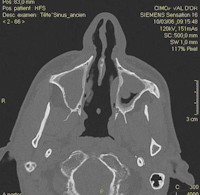
progressive Wegener's disease,
nasal manifestations of autoimmune diseases (relapsing polychondritis, etc.).
CERTAIN BEHAVIORS:
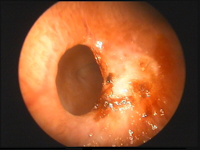
local inhalation drug use (especially cocaine addiction),
regular and persistent participation in violent sports
 |
 |
|
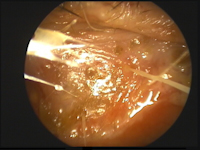
| Wegener's disease: septal ulceration | scan image |
Perforation of the septum after cocaine use |
PSYCHIATRIC DISORDERS
Facial plastic surgery can sometimes lead to significant psychological upheaval. It is only conceivable for individuals who are perfectly balanced and have a well-defined motivation. This implies that the desired correction addresses a genuine morphological aberration and not a hypothetical and unfounded complaint indicative of a psychological disorder, and that this correction will bring about the true result: psychological satisfaction and a real improvement in well-being.

