 Book an appointment online
Course of hospitalization and intervention
You return the evening before or the morning of the procedure on an empty stomach, that is to say without having eaten, drunk or smoked for the 7 hours preceding the anesthesia.
You must bring the results of the biological analyses carried out and, if applicable, your scan.
After settling into your room, you will take a shower with an antiseptic shampoo such as Betadine foaming shampoo.
medication in the form of a medication to help you relax. You will be taken to the operating room and positioned on a narrow operating table. The temperature is low, but the patient is protected by a disposable heating blanket.
In most cases,
anesthesia An IV will be inserted, the mask will deliver oxygen, and the anesthesia will be administered very quickly intravenously.
The procedure lasts from 30 minutes to 2 hours depending on the procedure to be performed.
You will wake up in the recovery room, where you will remain until you are fully conscious.
No particular pain is to be feared; it is more a matter of discomfort.
- the inability to breathe through the nose (breathing is exclusively through the mouth)
- the application of cold compresses to the eyes to limit the appearance of swelling and bruising
- the presence of nasal support (thermoformed splint, plaster cast, sterilstrip)
.jpg)
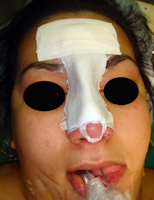
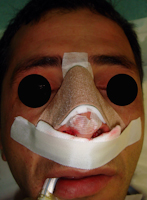
Appearance at the end of the procedure: plaster cast with strip or aluminum splint
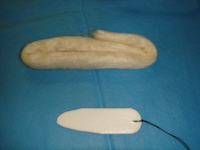
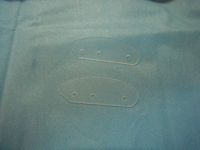
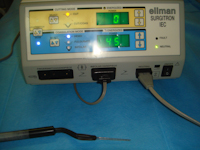
Immediate aftercare : The procedure can be performed on an outpatient basis, meaning you can leave the same evening, or it may require an overnight stay. In all cases, the nasal packing is removed before you leave. The new packing is completely different from the old material, and its removal causes no pain or significant bleeding. Sometimes, splints are placed on the nasal septum, especially in rhinoplasty cases. These are invisible and must be removed when the cast is taken off. They help prevent the risk of secondary synechiae (adhesions) following the procedure. A radiofrequency or laser turbinoplasty can be performed during the procedure to reduce the volume of the turbinates. This requires specific equipment, such as a radiofrequency generator.
 |
|
|
| Nasal wicks and tampons | Reuter's splints | Radio frequency generator with handpiece for horns |
Marks begin to appear around the eyes on the same day, but it is only the next day or the day after that the swelling and any bruising are at their maximum.
The discharge prescription does not include antibiotics or anti-inflammatories, but only nasal wash products and, if necessary, paracetamol (no use of aspirin).
The first post-operative consultation takes place on day 7 (day of the procedure day 0), but in case of any problem you must have the telephone contact details of the healthcare facility and your surgeon.

