 Book an appointment online
The zygomatic bone forms the prominence of the cheekbone. It supports the contents of the orbit. In the event of trauma, an isolated fracture of the orbital floor may occur, resulting in a sunken eye (enophthalmos), possible double vision when looking upwards, and potential numbness in the upper teeth and upper lip on the side of the fracture. If the entire zygomatic bone is fractured, one or more of these signs will be accompanied by a depression of the cheekbone.
- Given these symptoms, a facial scan and a complete ophthalmological examination, including an assessment of eye movement, are necessary. If displacement is present, surgery can be performed within 8 to 10 days.
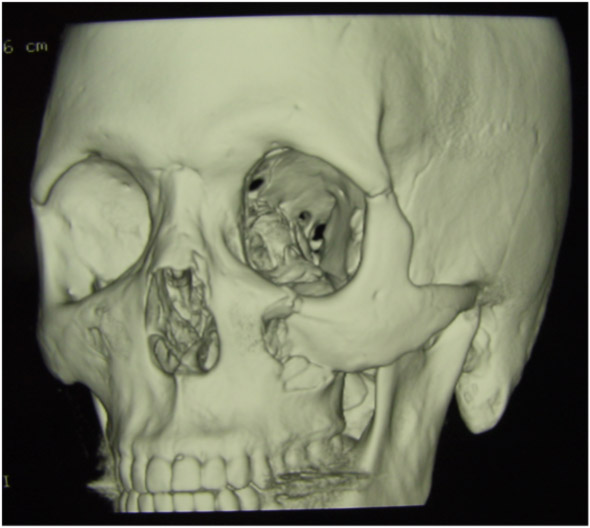
The procedure is usually performed under general anesthesia. Reducing the fracture restores the contours of the cheekbone. To prevent recurrence of the displacement and to repair the orbital floor, a small incision is made in the lower eyelid. A titanium microplate is screwed onto the orbital rim to stabilize the reduction. The orbital floor is explored and repaired if necessary, either with a cartilage fragment taken from the nasal septum or ear, a resorbable material plate, or a bone graft, generally taken from the skull in cases of large fractures (the brain is protected by two layers of bone; the outermost layer can be harvested without major consequences).
At the end of the procedure, a head dressing covering the operated eye is applied for 48 hours. This dressing is then removed, and the patient can be discharged from the hospital. Double vision is common in the days following the procedure. This usually disappears within a few days or weeks, possibly after a few orthoptic therapy sessions. The eyelid sutures are removed after one week. The scar fades completely over time. Numbness in the upper lips and teeth may sometimes recover more quickly after reduction if the nerve has not been too damaged by the fracture. A fracture repaired promptly can lead to a full recovery without any lasting effects. An unrepaired fracture can result in facial asymmetry and enophthalmos, which can worsen over time. This is known as "Silent Sinus Syndrome." (link to article on orbit and Orphanet). The aftereffects of a zygomatic bone fracture can be treated surgically. The orbital floor can be realigned, and a sunken cheekbone can be corrected with one or more bone grafts taken from the skull. Several procedures may be necessary to achieve a good result.
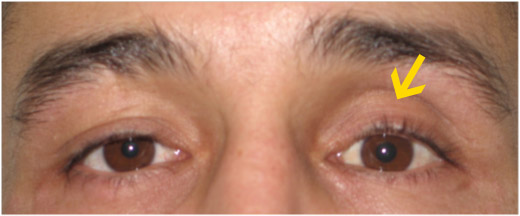
Left enophthalmos secondary to an untreated orbital floor fracture
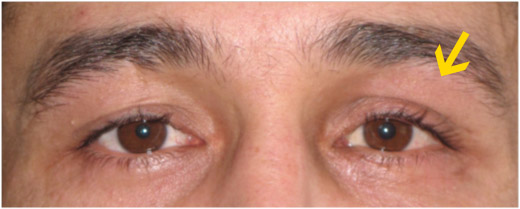
Symmetry restored after reconstruction of the orbital floor with a bone graft. No visible scar

